


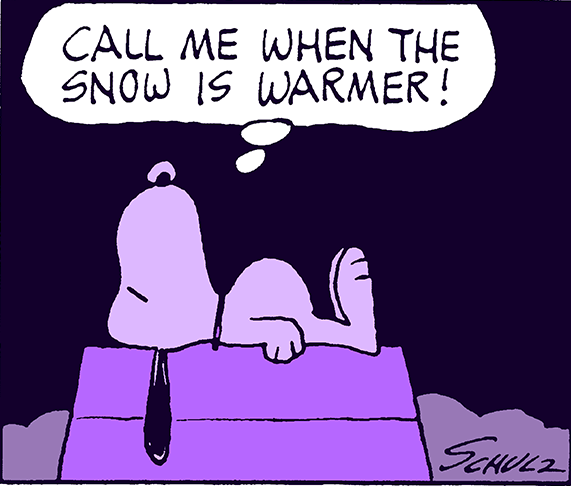
Snoopy is so right! Winter can have its appeal. But for our dogs and cats, the extreme cold can be downright treacherous. Despite wearing a fur coat at all times, dogs and cats can have trouble maintaining their body temperature in cold weather – even the big furry ones – and can suffer some severe ill effects in the deep freeze.
Here are some tips to help keep your pets safe in the extreme cold:
STAY INDOORS.
When the temperature reaches:
- 45 degrees: pay attention. While most dogs are ok here, small dogs should start to wear a coat to go outside.
- 32 degrees (official freezing mark): Even larger hairy dogs can start showing side effects from the cold. Senior dogs, puppies, dogs with thin coats, small dogs, and ill dogs should spend limited time outdoors.
- 20 degrees: All dogs should only go outside for short trips to go to the bathroom. Frostbite and severe hypothermia are real risks for all dogs, and can set in quickly. So, no long walks in the snow. Coats are essential for everyone.
- Below 0 degrees: Everyone stays indoors except for very short trips out for the bathroom. For small dogs, consider setting up a little area with artificial grass indoors where they can relieve themselves.
CLOTHING IS NOT OPTIONAL
- Coats and booties are not just a fashion statement When it’s windy, snowy, and blustery, clothing is essential to preserve body heat and protect feet. Booties are very important and helpful in protecting pawpads from rock salt and from cracking in the bitter cold, as well as slipping on icy surfaces. Ruffwear, and most sporting goods stores carry them. Make sure to size the booties correctly, and look for ones that have a rubber non-slip soul for traction, and Velcro straps get them easily on and off. It may take a few attempts to get them used to it, but most dogs will eventually accept the boots. If not, consider a product like Mushers Secret wax to help protect the feet. The pawpads are a big source of heat loss in pets, so keeping them covered will help preserve precious body heat.
- Be sure to remove coats and booties when coming back inside, and wipe the paws with a warm towel to remove any salt debris. Paw Washers, are an excellent way to clean the feet and warm them up.
PAY ATTENTION TO THE WARNING SIGNS.
- Shivering is a definite sign that it’s too cold out. Get indoors right away.
- Limping or holding up a foot can indicate that ice is starting to cake on the feet, or that salt is starting to burn the pads. Either sign warrants going right back inside.
- Refusal to go outside or walk is your dog’s way of telling you it’s too cold to go out. Respect their wishes.
WHAT ABOUT OUR KITTIES?
- Cats experience the effects of the cold just like dogs and humans. It’s even more important to keep indoor cats indoors.
- If your cat is outdoors, or you are caring for outdoor cats, make sure they have a sheltered area with bedding and litterboxes where they can escape the wind and brutal cold. Provide food, and check water bowls frequently, as they will freeze in cold weather. Dehydration, frostbite, and hypothermia can rapidly set in for outdoor cats.
- Outdoor cats (and other critters) will often seek the warmth of idling or recently turned off car engines. Make sure to lightly bang on the hood of your car before starting your engine to warn any critter to get out prior to starting your engine.
WHAT ELSE CAN I DO?
- Make sure to shovel your sidewalk and clear a safe path for the neighbors and their dogs.
- Use Pet-Friendly ice melt on slippery surfaces.
- If you see a stray dog out in the cold, call your local shelter for assistance in rescuing them. It could save their life.
The best thing for humans and pets to do in the frigid weather is to stay indoors, cuddle up, read a good book or watch TV, play some fun games, and stay warm together! Let’s all get through the brutal winter safely, and as Snoopy says, “Call me when the snow is warmer!”


